Key Questions
How many turbines can the site accommodate?
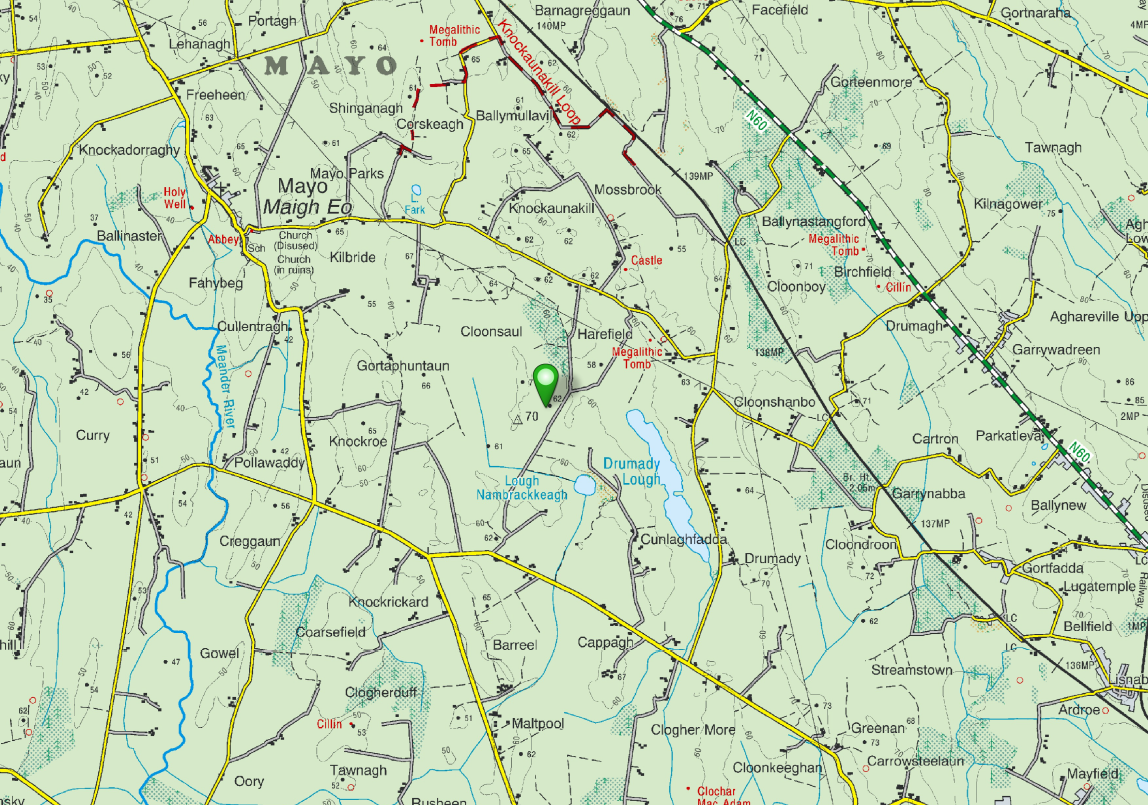
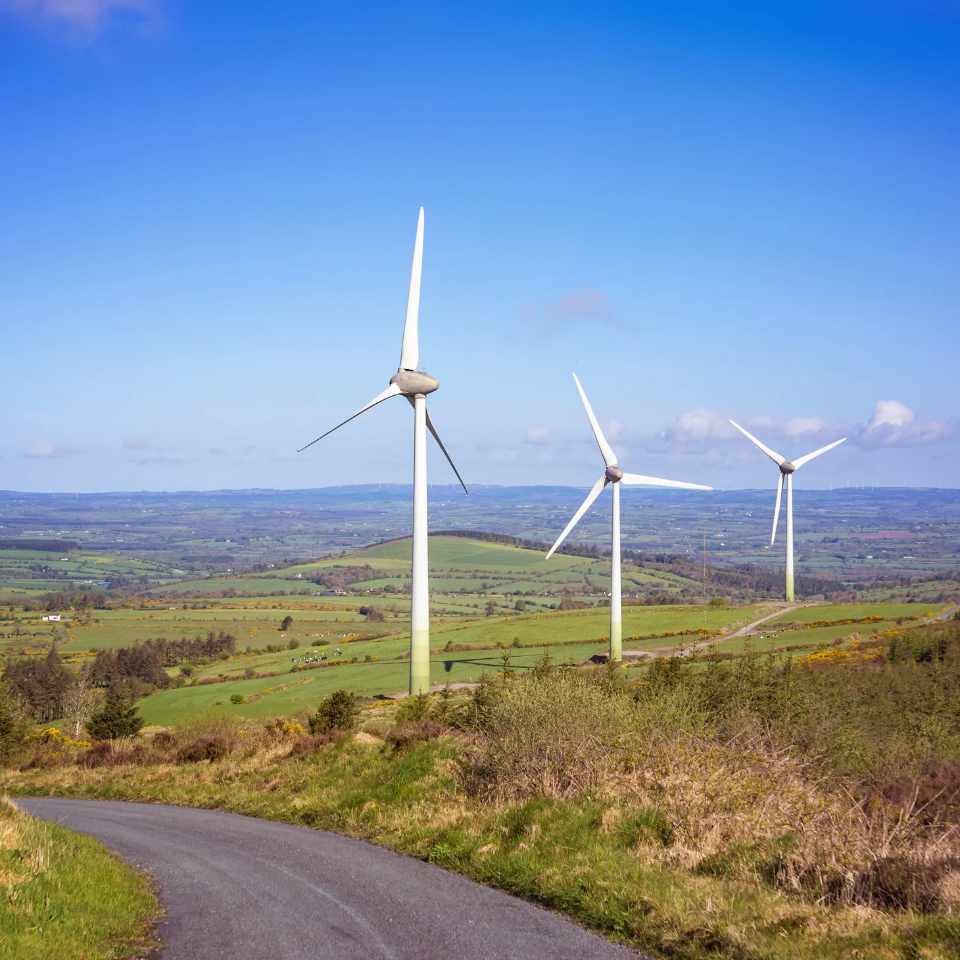
This site is potentially suitable for up to 7 wind turbines.
What size are the wind turbines expected to be?
The proposed overall height of the turbines (tower plus blade) is expected to be approximately 160 meters.
What is the project's timeline?
Cunlaghfadda Green Energy has commenced its community engagement programme and will advance its Environmental Impact Assessment of the site with a view to submitting its planning within the next 12 months.
What is the expected lifespan of the project?
The designed lifetime of an onshore wind farm is expected to be 25-30 years.
What is the expected reduction in carbon emissions from this project?
This project will reduce carbon emissions from more than 17,500 households each year. That is equivalent to 36,000 tonnes of carbon emission reduction per year.
Is there sound from the wind turbines?
The evolution of wind farm technology over the past decade has greatly reduced sound emissions from wind turbines, with the main sound being the aerodynamic swoosh of the blades passing the tower. There are strict planning regulations regarding sound emissions from wind turbines to protect residential amenities. A comprehensive noise monitoring regime will be undertaken to ensure the proposed development complies with regulations.
As part of the planning process, Cunlaghfadda Green Energy will ensure the project is constructed and operated to minimise sound. We will conduct extensive tests during the planning process to demonstrate that the proposed turbines will not exceed legislated noise levels.
During the site optimisation process, the wind turbine layout will be designed so that sound levels at nearby residential properties are minimised. The World Health Organisation has published its Environmental Noise Guidelines for the European Region in which recommendations are made for wind turbine noise. The recommended noise level should be below 45 dB. The current guidelines in Ireland and the UK, which are in line with international best practice, are set between 35 and 45 dB, depending on the time of day and background noise.
Sources:
World Health Organisation - https://www.who.int/europe/publications/i/item/9789289053563https://www.euro.who.int/en/health-topics/environment-and-health/noise/environmental-noise-guidelines-for-the-european-region
IAC Acoustics - https://www.iacacoustics.com/blog-full/comparative-examples-of-noise-levels.html
What is Shadow Flicker and how is it dealt with?
Shadow flicker is the effect of the sun (low on the horizon) shining through the rotating blades of a wind turbine, casting a moving shadow. It will be perceived as a “flicker” due to the rotating blades repeatedly casting the shadow. As part of the planning process, a shadow flicker assessment is carried out to determine the potential for shadow flicker at any dwelling. Planning guidelines require that any effects of shadow flicker be mitigated by installing solar sensors on the turbines which automatically shut down the turbine during times of possible shadow flicker. Therefore, there will be no shadow flicker experienced at any dwelling.
Has Cunlaghfadda Green Energy contacted landowners in the area?
Yes. The team has already engaged with landowners in the area and is commencing an extensive engagement and consultation process with a view to submitting a planning application for the project.
Can you outline how you will inform the local community on the progress of the project and community engagement activities?
Our Community Engagement process will include house-to-house visits, discussions with local elected representatives, and regular updates on this website.
Can you explain how you intend to engage with the local community?
Our Community Engagement process will involve open discussions with local residents and interested parties, with the outcomes used to help maximise the project's benefits for the community.
Cunlaghfadda Green Energy is committed to creating a wind energy development that is socially responsible and provides a substantial community benefit fund, with community participation playing a central role.
What is the timeline for the construction and generation of renewable electricity at the Cunlaghfadda site?
We are currently in the community consultation phase of the project. Timelines will be updated in the coming months.
Why are you developing onshore wind farms?
Onshore wind energy projects such as Cunlaghfadda Green Energy form a key part of the Government’s plan to enhance clean electricity generation, meet Ireland’s environmental targets and move to a more secure indigenous energy future.
What impact will the project have on carbon emissions?
Once the project is operational, it is estimated that a reduction in carbon emissions of up to 36,000 tonnes of CO2 per year will be achieved.
Is Cunlaghfadda Green Energy an Irish-owned company?
Cunlaghfadda Green Energy is an Irish-owned renewable energy company.
How can local residents share their views about the project?
The project team can be contacted using the contact details below.
Will residents be notified when the planning application has been lodged?
This website will be updated regularly with important project milestones, including lodgement of the planning application.
How will the project support employment?
The project will support employment in the energy supply and construction/maintenance sectors, creating in excess of 35 direct and indirect jobs, according to SEAI estimates.
Will the project support local jobs and contractors?
The team is committed to working with local suppliers where possible to source engineering works, materials, equipment hire and catering.
What are the benefits of onshore wind versus offshore wind?
Onshore wind has a proven track record as the most cost-effective option in Ireland, thanks to our location on the edge of Europe.
The development phase of offshore wind projects is significantly longer than that of other renewable energy projects due to the hostile marine environment. Securing offshore wind projects and grid connections can pose significant challenges.
Onshore wind offers additional benefits, such as the significant investment it brings to local communities. Benefits range from increased jobs to financial support for community projects that are yet to be realised through offshore wind energy developments.
What does this mean for the local community?
The local community stands to gain significant social and economic benefits through the Cunlaghfadda Green Energy Project Community Benefit Fund.
What is the Community Benefit Fund?
Renewable Energy Support Scheme projects (“RESS Projects”) must establish a Community Benefit Fund to be used for the wider economic, environmental, social and cultural well-being of the local community.
What is RESS?
RESS is the new Renewable Electricity Support Scheme in Ireland. It is a pivotal component of the National Energy and Climate Plan and is essential for achieving Ireland's 80% renewable electricity target by 2030.
RESS provides support to renewable electricity projects in Ireland. With a primary focus on cost effectiveness, the RESS delivers a broader range of policy objectives, including:
- increasing technology diversity by broadening the renewable electricity technology mix
- delivering an ambitious renewable electricity policy to 2030
- increasing energy security, energy sustainability and ensuring the cost effectiveness of energy policy
What is the contribution from this project?
The contribution is to be set at €2 per Megawatt hour of generation of the RESS Project. This means there are real and quantifiable funds being made available annually for the benefit of the local community.
How much is the estimated value of the Community Benefit Fund?
In line with Community Benefit Fund Guidelines, governed by the Sustainable Energy Authority of Ireland, Cunlaghfadda Green Energy will generate a Community Benefit Fund estimated at €2 million over the first 15 years of operation. A conservative estimate values the Fund at approximately €145,000 per annum.
How is the Fund managed and distributed?
Cunlaghfadda Green Energy will work in partnership with local residents to form a committee to oversee the administration of the Community Benefit Fund. The committee will be established once the project successfully completes the planning permission process.